
I was recently talking with the CFO of a food manufacturer about the key metrics that matter most in food and beverage manufacturing. We eventually zeroed in on performance metrics, specifically customer service and delivery performance. He mentioned that their target for on-time, in-full (OTIF) delivery is 98.5%. The reality? They’re consistently running between 95.5% and 96%.
“Not good enough,” he said.
So I asked him one question. “What does that gap cost you?”
He laughed. “Great question, Steve. Right now? Nothing. No lost sales. No lost profit.”
So I asked the obvious follow-up. “Then why track it?”
“Because I know someday it’s going to bite me.”
I’ve thought about that answer all week. He’s right about the bite.
But then I thought he might be wrong about the “Nothing”.
Nothing is Not a Number
“Nothing” is not the cost of missing the target. It’s the cost nobody has calculated.
Think about a bad roof. On a sunny day, it costs you nothing. No water on the floor. No damage. No repair bill. But the roof is just as bad as it was. The weather hasn’t turned yet.
That’s the 96.
The sun is out. No lost sales. No lost profit. But the weakness is still there, building behind the scenes, waiting for a trigger. A tighter retailer scorecard. A big promotion. A shelf review. When the storm comes, the cost doesn’t arrive in installments. It arrives all at once, and he’ll be doing the math in a meeting he didn’t schedule, across the table from a buyer who did.
What the Bite Actually Looks Like
It won’t arrive as one bill. It arrives as a pile-up, usually in the same week.
The fine. Most grocery and retail chains run some version of a fine or scorecard. A fine is a line item. A CFO can absorb a line item. That’s the trap.
The double hit. In perishables, a late delivery often means a product nobody can sell. That’s a chargeback and a write-off on the same truck, at the same moment.
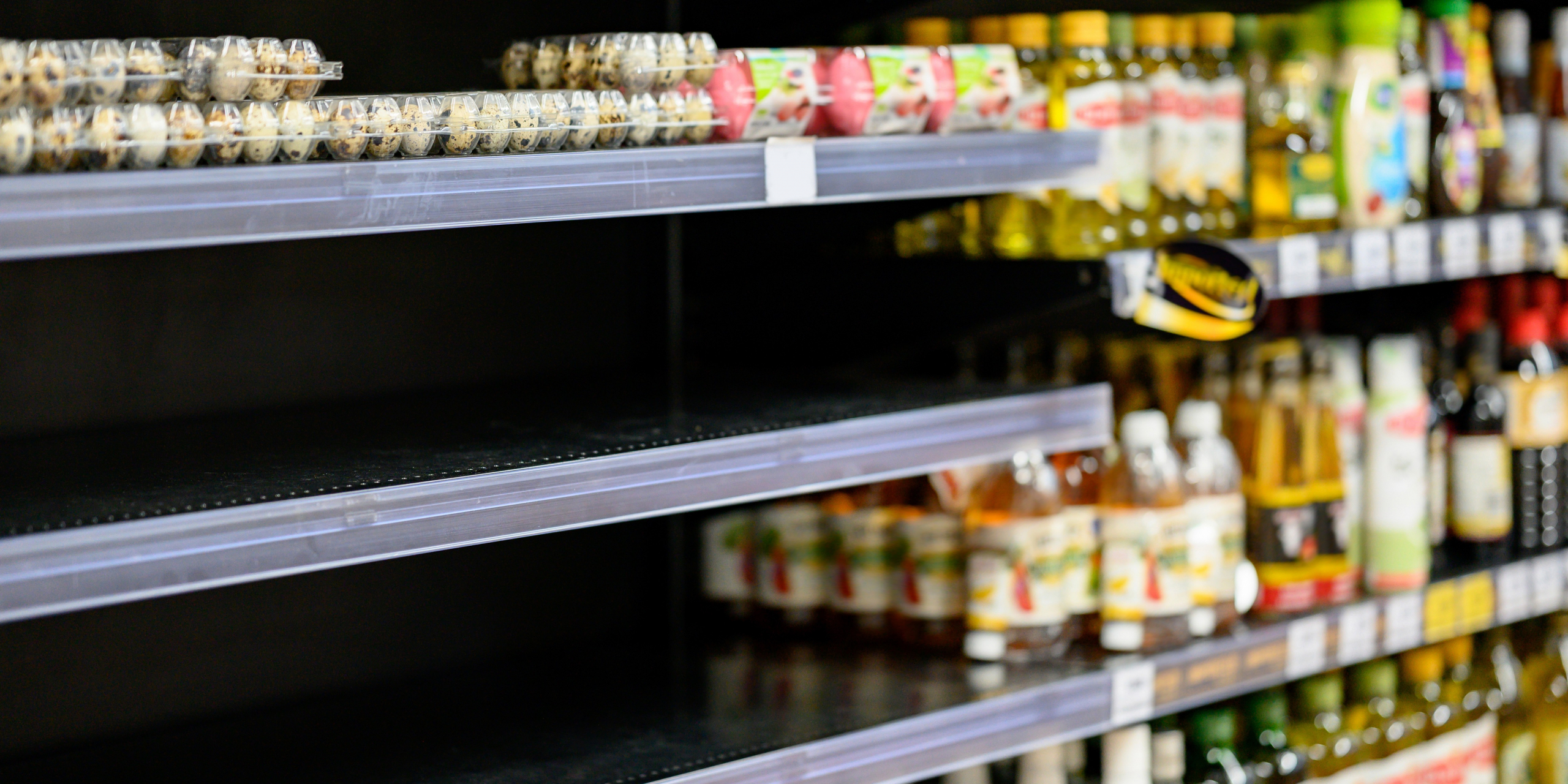
The shelf. Here’s how your buyer sees the world. Grocery margins are razor thin. Shelf space is real estate sold to the highest bidder, and for some chains those fees are a large part of their profits. Your buyer is part grocer, part landlord.
A landlord asks one question about every tenant. Are you filling the space and holding up your end? Every missed order is an empty facing, and an empty facing earns the retailer nothing. Repeated misses can influence order allocation and shelf priority over time. So the cost of a miss isn’t a charge today. It’s a foot of shelf space tomorrow.
Fewer facings means fewer units sold. Lower volume. No invoice. No warning. Just a planogram with less of you on it and a competitor in the gap. And getting that space back is not free. Retailers charge fees to get on the shelf, and some charge pay-to-stay fees to keep your space.
That’s what makes “nothing” so dangerous. The real cost of a miss isn’t a fine. It’s your real estate, shrinking quietly.
The average. Your blended number sounds like one number. It’s every customer, every SKU, every lane rolled into a comfortable lie. Your best account may be getting near perfect service. Your biggest may be getting far less. The blend hides the one place where the miss actually lives.
Can your team name that account? If not, your 96% is a comfort number, not a management tool.
The Target Isn’t Random
98.5 isn’t a number somebody pulled out of the air. For most CP and F&B manufacturers, it’s roughly where the math works.
Below it, you’re exposed to fines, write-offs, and lost shelf space. Above it, you start paying more to close the gap than the gap ever cost you.
Perfect service doesn’t exist in food. Every point past the sweet spot costs more than the one before it. Safety stock. Expedited freight. Spare capacity. Overtime. And in food, every extra case of buffer has a clock on it. It doesn’t just tie up cash. It expires. Anyone who promises a food company 100% service has never carried inventory.
So the industry landed near 98.5 because that’s where the curve bends. Which makes the CFO’s 96 a different story. He’s sitting below the line where the economics work, and he has no idea how far the exposure runs. The target exists because somebody priced the curve. He’s running on their math, not his own.
There are two ways to lose here. Chase the number blindly and bleed margin into inventory that spoils. Ignore it and wait for the bite. Both come from the same failure: nobody priced it for his business.
Why “Nothing” Feels True
Try three questions. If you can’t answer them in an hour, you have your answer.
- What does closing the gap cost us? Carrying cost, expedites, overtime, extra capacity, spoilage.
- What does missing it cost us? Fines, write-offs, and lost allocation, by customer.
- Which customers and SKUs drive the misses? Names. Not a percentage.
Don’t blame your team. Blame the setup. Orders live in one system. Inventory lives in another. True cost lives in a spreadsheet. Chargebacks live in an AP inbox. And most of those are systems of record. They tell you what already happened. They can report last month’s OTIF to the decimal. They can’t tell you why it slipped, who owns the fix, or what to do about the order sitting on the dock today.
That’s why “nothing” feels true. The data exists. The connection doesn’t.
A System of Record Tells You. A System of Action Acts.
A system of record tells you the truck was late. A system of action can help keep it from leaving late.
QAD Adaptive ERP is built to be the second one. It works by connecting three things most manufacturers run separately: processes, systems, and people.
Processes. The platform comes with process maps built for your industry, including food and beverage and consumer products. They lay out how work should flow from order to shipment, with the checkpoints where service levels are won or lost already in place. Lot and expiry control enforced at every transaction. Quality holds that reach the right people. Traceability built into normal operations. Your OTIF stops being a report you pull at month end. It becomes the output of a process built to protect it. And you start from fit, not from customization.
Systems. One connected platform from supplier receipt to customer shipment. Orders, inventory, cost, quality, and shop floor data in the same place. A miss is no longer a mystery. It’s a number with a name on it, and now you can price it.
People. Champion Assist lets any planner, customer service rep, or finance lead ask, in plain English, which orders are at risk this week. ChampionAI takes the coordination grind off your best people. The Procurement and Sourcing Champions chase suppliers and respond to disruption before it becomes a late truck. The Sales Champion keeps customer commitments honest. More Champions are coming for production planning and scheduling. Your people stop chasing and start fixing.
You don’t need a multi-year ERP project to start. ChampionAI works on the ERP you run today, QAD or not, with KPIs set at kickoff in your own system. The ROI isn’t a slide. It’s yours.
Fix It While the Sun Is Out
One day a buyer will put your scorecard on the table and ask two questions. What is this costing you? What are you doing about it?
If your answer is “nothing,” you’ve answered neither.
The CFO on my call had the right instinct. He knew it would bite. But instinct is not a plan.
Right now, the sun is out. No lost sales. No lost profit. Nothing.
That is exactly when you fix the roof.